


Healthcare Chairs & Seating Australia – Hospital, Aged Care, NDIS & Home Use
Safety and Mobility supplies a comprehensive range of healthcare chairs and specialist seating for use across hospitals, aged care facilities, rehabilitation centres, community care settings, and private homes. Whether you need a pressure care chair for a long-term resident, an ergonomic stool for a surgical suite, a lift recliner for a client living at home, or a robust mobile chair for a ward environment, our range covers every clinical and domestic seating need.
Appropriate seating is a fundamental component of clinical care and quality of life. Poorly suited chairs can contribute to pressure injuries, postural decline, pain, reduced circulation, and difficulty with transfers — all of which have real consequences for both the individual and the healthcare team responsible for their care. Our seating range is selected with these clinical realities in mind, offering chairs and stools that combine comfort, function, adjustability, and durability across a wide variety of care environments.
Chairs, Stools and Seats for the Health Care Industry
Safety and Mobility offers an extensive range of high quality, versatile, and multipurpose chairs, seats, and stools designed specifically for healthcare environments. Our range covers the full spectrum of clinical and residential seating needs:
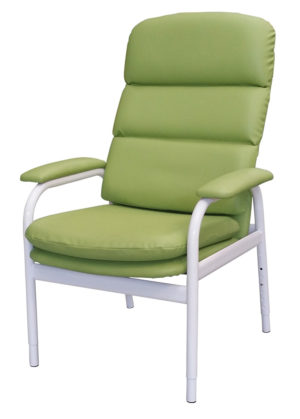
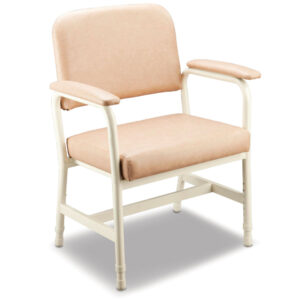
- High Back Chairs – Full back support chairs ideal for residents and clients with reduced trunk stability or postural needs, commonly used in aged care and hospital settings
- Low Back Chairs – A practical option for clients who require a more compact profile or less structured back support, suitable for a range of care environments
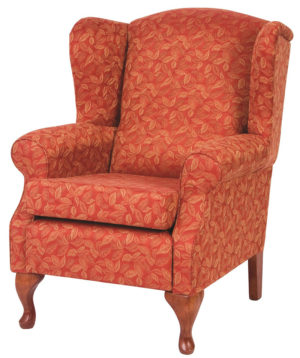
- Lounge Chairs – Comfortable upholstered chairs for rest areas, bedrooms, and resident rooms in aged care and rehabilitation facilities
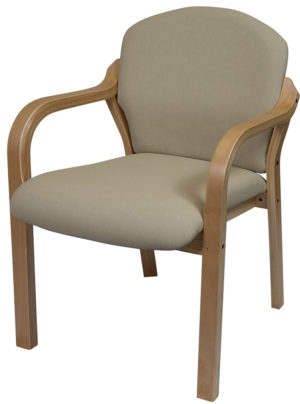
- Dining Chairs – Functional, easy-clean chairs suited to healthcare dining rooms and communal spaces, available in a range of heights and styles
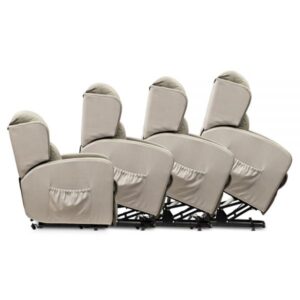
- Lifter & Recliner Chairs – Electrically operated chairs that assist the user to rise to a standing position, reducing fall risk and carer manual handling; suitable for home use and aged care
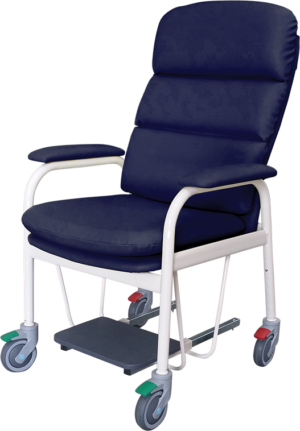
- Mobile Chairs – Chairs fitted with lockable castors for easy repositioning in clinical and ward environments
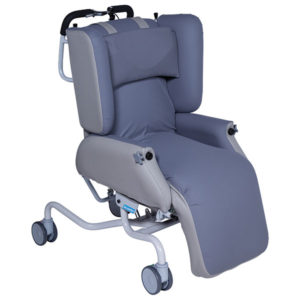
- Pressure Care Chairs – Specialist chairs (sometimes known as ‘water chairs’, ‘princess chairs’ or ‘fallout chairs’) with cushioning and postural features designed to reduce pressure injury risk for clients who spend extended periods seated
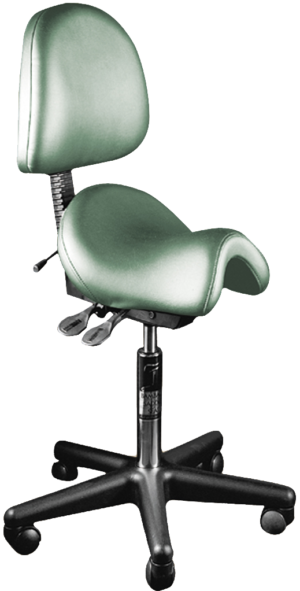
- Ergonomic Seating & Surgeon Stools – Clinically designed seating for healthcare professionals, including saddle stools, task chairs, and specialist surgical stools
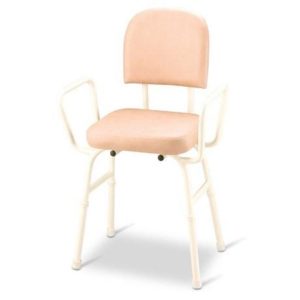
- Perching Stools – Semi-standing stools that allow users to take weight off their feet while maintaining an upright posture, useful in therapy and rehabilitation settings
- Foot Stools & Leg Rests – Complementary accessories to improve comfort and positioning when seated
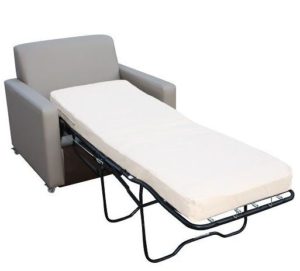
- Sofa Beds – Practical dual-purpose furniture suitable for family rooms, patient rooms, and carer accommodation in healthcare facilities
All seating options offer safe, stable, comfortable, and supportive structures for use in hospitals, nursing homes, aged care facilities, community care, and home care environments. Many styles, patterns, colours, and designs are available to suit specific tastes and facility requirements, with numerous optional extras such as tables or footrests to improve comfort, support, manoeuvrability, and functionality. Bariatric seating options are also available for clients requiring higher weight-rated chairs.
Choosing the Right Healthcare Chair
The right chair depends on a range of clinical and practical factors, including the user’s postural needs, mobility level, time spent seated, risk of pressure injury, transfer requirements, and the care environment. Key features to consider include seat height adjustability, armrest height and removability (to facilitate safe transfers), back support profile, upholstery type (vinyl or antimicrobial fabric for clinical settings), weight capacity, and whether castors or glides are more appropriate for the setting. An occupational therapist (OT) can assist with a formal seating assessment where complex needs are involved.
NDIS Approved Chairs and Furniture
NDIS approved furniture and seating plays a crucial role in enhancing the comfort, independence, and daily functioning of people living with disability. Safety and Mobility is a registered NDIS provider, and many of the chairs and seating products in our range are eligible for funding under the NDIS Assistive Technology support category — including pressure care chairs, lift recliner chairs, specialised seating systems, and ergonomic furniture where these are assessed as reasonable and necessary for an individual’s needs.
NDIS approved seating options available through Safety and Mobility include chairs designed to promote better posture, pressure injury prevention, and ease of transfers — helping participants engage in daily activities with greater independence and comfort. Specialised cushions and positioning systems can be paired with seating to provide additional postural support and pressure relief for participants with complex mobility or skin integrity needs.
As a registered NDIS provider, Safety & Mobility can work directly with NDIS participants, their support coordinators, and plan managers to identify appropriate seating solutions and provide itemised quotes for plan approval. We have extensive experience supplying AT-funded seating to participants across a range of disability types and care settings — contact us on (02) 9983 9520 or submit a quote request and our team will be happy to assist.
Browse the subcategories below or contact our team for help selecting the right seating solution.
Frequently Asked Questions — Healthcare Chairs & Seating
Q: What is a pressure care chair and who needs one? A pressure care chair is a specialist chair designed to redistribute pressure away from bony prominences — such as the sacrum, coccyx, and ischial tuberosities — to reduce the risk of pressure injuries (also known as pressure sores or decubitus ulcers) in individuals who spend prolonged periods seated. They are typically recommended for clients in aged care, hospital, or home care settings who have limited mobility, reduced sensation, poor circulation, or existing skin integrity concerns. Pressure care chairs often feature high-density or gel-infused foam, tilting or reclining functions to shift pressure loading, and supportive postural features. They are sometimes used in conjunction with a pressure care cushion for optimal protection.
Q: What is a lift recliner chair and is it covered by the NDIS? A lift recliner chair (also called a lifter chair or rise-and-recline chair) is a single or dual motorised armchair with an electric mechanism that gently tilts the seat forward to help the user move from seated to standing with minimal effort. This significantly reduces the risk of falls during transfers and lessens the manual handling burden on carers. Lift recliners are commonly recommended for people with arthritis, reduced lower limb strength, Parkinson’s disease, post-surgical recovery, and a range of other conditions affecting mobility. They may be eligible for NDIS funding under the Assistive Technology support category where assessed by an occupational therapist as reasonable and necessary. Safety & Mobility is a registered NDIS provider and can assist with the quote and approval process.
Q: What types of chairs are suitable for hospital and aged care facilities? Hospital and aged care environments require chairs that meet specific hygiene, durability, and functional standards. High back chairs and lounge chairs with vinyl or antimicrobial upholstery are widely used in resident rooms and day areas as they are easy to clean and provide good postural support. Mobile chairs with lockable castors are practical in ward and therapy settings where chairs need to be repositioned regularly. Dining chairs for healthcare use need to be appropriately sized, easy to clean, and stable enough to support residents with varying levels of ability. Pressure care chairs are essential for residents with elevated skin integrity risk. Safety & Mobility supplies all of these chair types to hospitals, residential aged care facilities, and community care providers across Australia.
Q: What is the difference between a high back chair and a low back chair? A high back chair provides support up to and including the upper back and sometimes the head and neck, making it suitable for clients who need full spinal support or who spend long periods seated. It is often recommended for individuals with postural instability, neurological conditions, or fatigue-related muscle weakness. A low back chair supports the lumbar region and lower back but leaves the upper back and shoulders free, making it more appropriate for users who have adequate trunk control and only need light support. The right choice depends on the individual’s postural needs, functional ability, and how long they will be seated — an occupational therapist can advise on the most appropriate option for a specific client.
Q: What is a perching stool and when is it recommended? A perching stool is a forward-slanting stool that allows the user to adopt a semi-standing posture — partially weight-bearing through the legs while still having a surface to rest on. This position reduces fatigue during tasks that require standing for extended periods, such as kitchen or bench work, while encouraging a more active posture than conventional sitting. Perching stools are commonly recommended in occupational therapy for people who find prolonged standing difficult but benefit from remaining upright — for example, during rehabilitation, for people with lower back pain, or for those managing conditions such as COPD or heart failure. They are also widely used by healthcare professionals in clinical settings.