


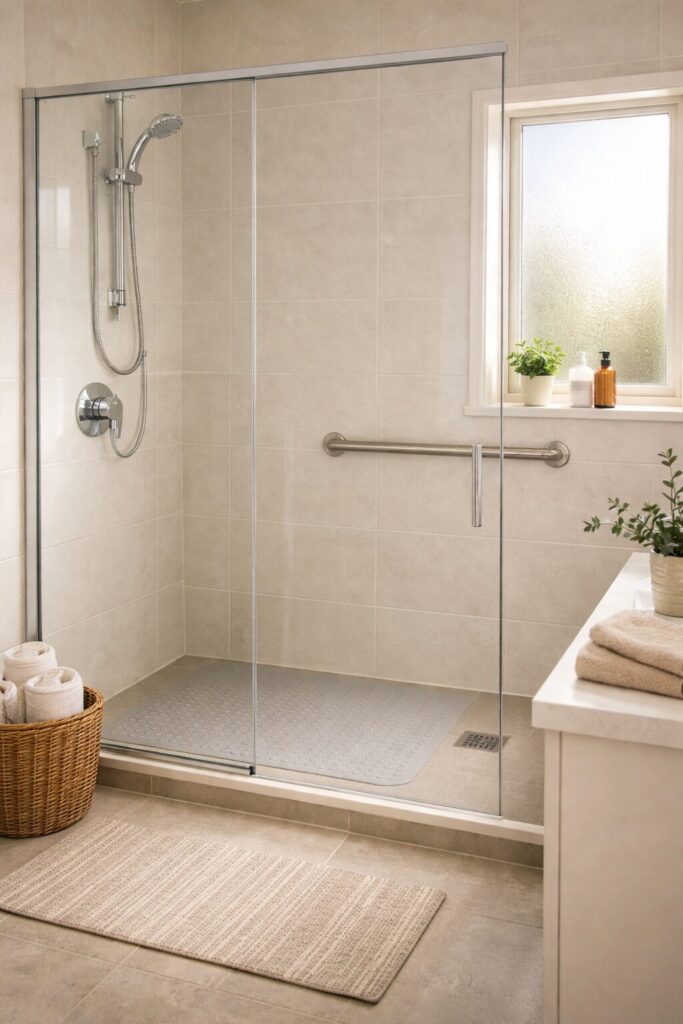
The bathroom is one of the most important rooms in the home — and, unfortunately, one of the most hazardous for people with limited mobility. The statistics paint a sobering picture: according to the Australian Institute of Health and Welfare (AIHW), falls are the most common cause of hospitalised injury and injury death among Australians aged 65 and over, with 248,211 fall-related hospitalisations recorded in 2023–24 alone.
For older Australians, the risk of falling is far greater than many people realise. The Australia and New Zealand Falls Prevention Society reports that around 30% of adults over 65 experience at least one fall per year, and that older people are 12 times more likely to fall than to be involved in a motor vehicle or pedestrian accident. The bathroom — with its wet surfaces, confined spaces, and the physical demands of bathing — is one of the highest-risk environments of all. Tiled floors and sharp corners are unforgiving in the event of a fall.
The good news is that these accidents are often preventable. In this blog post we explore the key bathroom safety aids that can help reduce injury risks for elderly Australians, people with disabilities, and those recovering from illness or surgery. We walk through the three cornerstone elements of a safe, accessible bathroom: shower chairs, grab bars, and anti-slip flooring. Together, these modifications can dramatically reduce the risk of falls and help people maintain their independence with confidence.
The Real Cost of a Fall
Before diving into solutions, it’s worth understanding what’s at stake. For many people, a fall isn’t just a bruise or a fright — it can be life-changing.
The AIHW identifies hip fracture as the most serious and costly fall-related injury. Among elderly people who sustain a hip fracture, around 25% do not survive, and of those who do, approximately one third never regain complete mobility, according to the Australia and New Zealand Falls Prevention Society.
Beyond physical injury, the psychological consequences of falling are significant. Even a fall that causes no injury can trigger a deep fear of falling again — leading people to reduce their activity, which in turn accelerates muscle weakness, poor balance, and social isolation, creating a dangerous cycle that increases the risk of future falls (Healthdirect, 2023).
Importantly, research shows that these falls are not inevitable. The NSW Health Department’s 2023 White Paper on Fall Prevention found that falls can be reduced by up to 34% within a year through coordinated, evidence-based interventions — including environmental modifications like those discussed in this guide.
Why Bathroom Safety Is Important for People with Limited Mobility – Why the Bathroom Demands Special Attention
Falls occur across many settings, but the bathroom presents a unique combination of hazards: water and soap on hard surfaces, the physical effort of undressing and bathing, transitions between sitting and standing, and often limited space to recover balance. For someone with reduced strength, limited mobility, or a condition affecting balance or coordination, these factors compound dramatically.
The right aids and modifications directly address these hazards. As the Australian Commission on Safety and Quality in Health Care notes in its national guidelines on falls prevention, environmental interventions — including non-slip surfaces, grab rails, and seated bathing aids — are among the most effective strategies available.
1. Shower Chairs for Disabled People – How Shower Chairs Improve Bathroom Safety
One of the most impactful additions to an accessible bathroom is a quality shower chair. A shower chair for disabled people provides a stable, supported seating position during bathing, eliminating the need to stand for extended periods and significantly reducing the risk of a slip or fall.
Who Benefits from a Shower Chair?
Shower chairs and stools are suitable for a wide range of users, including:
- Elderly individuals who experience fatigue or reduced balance when standing
- People with physical disabilities affecting lower limb strength or coordination
- Those recovering from surgery or injury, such as hip replacements or stroke rehabilitation
- People with neurological conditions such as multiple sclerosis or cerebral palsy
- Anyone with reduced stamina or endurance during daily activities
Types of Shower Chairs and Stools
Not all shower chairs are the same. Choosing the right one depends on the individual’s level of support needed, bathroom layout, and personal preferences.
Shower Chairs with Backrest and Armrests These provide the highest level of support, making them ideal for users who need assistance maintaining an upright posture. Armrests allow the user to lower and raise themselves more safely, reducing reliance on a carer.
Shower Stools Backless and compact, shower stools are a great option for users who have reasonable core stability but simply need a rest point during bathing. They work well in smaller shower recesses where a full chair may not fit.
Swivel Shower Chairs and Stools A swivel mechanism allows the user to rotate easily between sitting and standing — particularly useful for those who need help transitioning in and out of the shower. Swivel chairs are also valuable for carers, as they reduce bending and awkward positioning during assisted bathing.
Bariatric Shower Chairs Designed for heavier users, bariatric shower chairs offer extra-wide seats and reinforced frames with higher safe working load (SWL) ratings — often up to 300kg — ensuring that all users receive the same level of safety and support.
Drop-Down Shower Seats Wall-mounted and foldable, drop-down shower seats are a space-saving solution for bathrooms where a freestanding chair may be impractical. They fold flat against the wall when not in use, keeping the shower area clear.
What to Look for in a Shower Chair
When selecting a shower chair for a disabled person or elderly individual, consider the following features:
- Non-slip rubber feet to prevent the chair from sliding on wet floors
- Rust-resistant frame — aluminium or zinc-coated steel are ideal for wet environments
- Height adjustability to suit different users and bathroom setups
- Drainage holes in the seat to prevent water pooling
- Weight capacity appropriate for the user
- Easy-to-clean materials for hygiene maintenance
Safety and Mobility stocks a comprehensive range of shower chairs and stools to suit varying needs and budgets. As an NDIS-registered provider, eligible participants may be able to access shower chairs through their NDIS funding. Browse our full range of shower chairs and stools here.
2. The Benefits of Grab Rails and Support Handles
Grab bars are one of the simplest and most effective bathroom safety modifications available. The Australian Commission on Safety and Quality in Health Care specifically recommends handrails and grab rails in wet areas as part of a best-practice falls prevention approach in both home and clinical settings.
Strategically installed near the shower, bath, and toilet, they provide a secure anchor point during high-risk transitions — entering and exiting the shower, standing from the toilet, or lowering into the bath — precisely the moments when falls are most likely to occur.
Where Should Grab Bars Be Installed?
Inside the shower recess: A horizontal or angled bar at approximately waist height gives users something to hold while moving into position on a shower chair or stepping over a threshold.
At the shower entry: A vertical bar beside the shower door or entry point assists with the initial step in and out — one of the highest-risk moments in the bathing routine.
Beside the toilet: A bar on the wall beside the toilet helps users lower and raise themselves safely, which is especially important after hip surgery or for those with knee and joint conditions.
Adjacent to the bath: If the person still uses a bathtub, a bar positioned at the bath edge assists with safely entering and exiting.
Choosing and Installing Grab Bars Safely
- Load-rated hardware: Ensure the bar and its fixings are rated to support the user’s weight under dynamic load — that is, the force applied during a near-fall.
- Installation into studs or reinforced walls: Grab bars must be anchored securely into wall studs or a solid backing board, not just drywall.
- Textured surface: Look for bars with a non-slip surface texture to maintain grip with wet hands.
- Tailored positioning: Height and placement should be tailored to the user’s reach and the specific movement being assisted.
Safety and Mobility offers a range of bathroom rails suitable for home and aged care environments. For installations, consulting an occupational therapist (OT) and appropriately qualified installer is strongly recommended — OTs can assess the individual’s specific needs and advise on optimal placement whilst an installer can ensure it is safely affixed to an appropriate wall. OT home assessments and sometimes installation costs are often covered under NDIS, aged care packages, or private health insurance.
3. Reducing Slip Risks with Anti-Slip Bathroom Flooring Solutions
Even with a shower chair and grab bars in place, a slippery floor remains a significant hazard. The AIHW’s 2023–24 data confirms that falls on the same level from slipping, tripping, and stumbling are the single largest cause of fall injury hospitalisations in Australia. In the bathroom, water and soap residue on smooth tiles are a primary contributor to this risk.
Options for Anti-Slip Bathroom Flooring
Anti-slip bath mats and shower mats: The quickest and most affordable solution, these mats feature suction cups on the underside to grip the floor and a textured surface to provide traction. They can be placed in the shower base and on the bathroom floor outside the shower. Regular cleaning is essential to prevent mould buildup underneath.
Anti-slip adhesive strips: Self-adhesive strips applied directly to existing tiles provide traction without renovation. Available in clear or coloured options, some can even be cut to size and are a practical solution for renters or those not ready for structural changes.
Tips for Maintaining Anti-Slip Flooring
- Clean bath mats frequently and replace them when the suction cups lose effectiveness.
- Clean the bathroom floor regularly — soap scum and grime can reduce the effectiveness of anti-slip surfaces over time.
- Remove wet towels and clothing from the floor promptly.
- Ensure adequate drainage so water doesn’t pool on the floor after showering.
Choosing the Right Bathroom Safety Equipment – Putting It All Together: A Safe Bathroom Setup
An accessible, safe bathroom doesn’t require a complete renovation — often, a targeted combination of aids and modifications makes a significant difference. A typical setup for a person with limited mobility might include:
- A shower chair or stool positioned securely in the shower recess
- A vertical entry grab bar at the shower opening
- A horizontal support rail inside the shower at a comfortable height
- A non-slip bath mat on the shower floor and outside the shower
- A toilet rail beside the toilet for safe sitting and standing
The right combination will depend on the individual’s condition, mobility level, home environment, and personal preferences. An occupational therapist can conduct a home assessment and provide tailored recommendations — and as noted above, this is often a funded service.
Bathroom Safety for Aged Care, Disability & Home Support: NDIS and Aged Care Funding Options
For Australians living with disability, many bathroom safety aids — including shower chairs for disabled people — may be funded through the National Disability Insurance Scheme (NDIS) under the Assistive Technology category. Safety and Mobility is a registered NDIS provider, making it straightforward for participants to access our range of products through their approved plans.
Older Australians may also be eligible for funding through Home Care Packages (recently transitioned to the Support at Home program) or the Commonwealth Home Support Programme (CHSP), which can cover the cost of bathroom modifications and equipment.
If you’re unsure about your eligibility or how to access funding, speak with your NDIS planner, aged care coordinator, or an occupational therapist.
Explore Our Range at Safety and Mobility
At Safety and Mobility, we supply bathroom safety equipment to individuals, families, aged care facilities, disability support providers, and hospitals across Australia. Our team understands that every person’s needs are different, and we’re here to help you find the right solution.
Browse our full range of shower chairs for disabled people and stools →
For more information or personalised product advice, contact our friendly team on (02) 9983 9520 or email headoffice@safetyandmobility.com.au.
Sources
- Australian Institute of Health and Welfare (AIHW) 2024, Injury in Australia: Falls, Australian Government. aihw.gov.au
- Australia and New Zealand Falls Prevention Society, Info About Falls. anzfallsprevention.org
- Australian Commission on Safety and Quality in Health Care 2009, Preventing Falls and Harm From Falls in Older People, Australian Government. safetyandquality.gov.au
- NSW Health Department 2023, White Paper on Fall Prevention, NSW Government.
- Healthdirect 2023, Falls Prevention, Australian Government. healthdirect.gov.au
- Better Health Channel 2022, Preventing Falls at Home, Victoria State Government. betterhealth.vic.gov.au
Frequently Asked Questions
A shower chair provides seated support while showering, helping reduce fall risks and improve stability for people with limited mobility.
Shower chairs are commonly used by elderly individuals, people recovering from surgery, and users with disability or mobility limitations.
Grab rails help provide balance and support when sitting, standing, or moving around wet bathroom areas — particularly during transfers in and out of the shower or from the toilet.
Common bathroom safety aids include shower chairs, grab rails, anti-slip mats, raised toilet seats, and shower commodes.
Yes. Bathroom mobility aids can help users maintain independence and improve confidence when using the bathroom safely, often reducing or eliminating the need for carer assistance.